
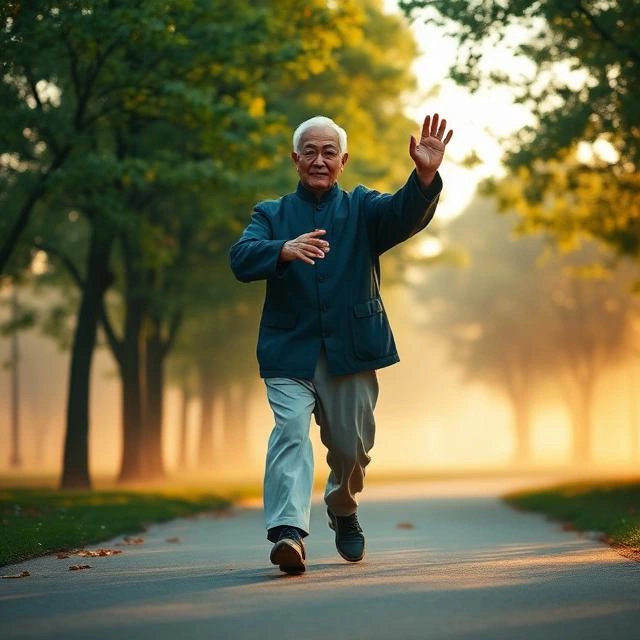
Tai Chi Walking: How Slow, Mindful Steps Can Transform Your Health
Tai chi walking is one of the most powerful yet underappreciated exercises available to people of all ages. Combining the ancient wisdom of traditional Chinese martial arts with the universal accessibility of everyday walking, this mindful movement practice delivers a remarkable array of physical and mental health benefits. Whether you are recovering from an injury, managing a chronic condition, looking to reduce stress, or simply searching for a gentle and sustainable daily exercise, tai chi walking offers a proven path forward.
In this comprehensive guide, we will explore what tai chi walking is, where it came from, who developed it, how and when to practice it, why science strongly supports it, and exactly how it differs from ordinary walking. We have also included research citations, a detailed comparison table, and answers to the most frequently asked questions.

What Is Tai Chi Walking? Understanding the Meaning and Definition
Tai chi walking is a slow, mindful, and intentional form of movement that applies the core principles of traditional Tai Chi Chuan — weight shifting, postural alignment, coordinated breathing, and mental presence — to the simple act of walking.
Unlike everyday walking, which is largely automatic and often hurried, tai chi walking transforms each step into a deliberate, flowing movement. Every foot placement, weight transfer, and breath is performed with full awareness, making it a moving meditation rather than simply a form of transportation.
Walking expert and chief medical advisor at AllTrails, Dr. Suzanne Hackenmiller, describes it as follows: tai chi walking is a form of moving meditation that involves an intentional, slow flow of motion. Personal trainer and meditation teacher Federica Gianni adds that in tai chi walking, every step is done with full awareness — you shift your weight carefully, coordinate your breath, and stay relaxed and balanced. It is almost like doing moving meditation, but in walking form.
The practice is also sometimes called Cat Walking, because practitioners aim to move with the quiet, balanced, and deliberate precision of a cat — testing the ground before committing weight, staying low and grounded, and moving without wasted energy.
The Origins of Tai Chi Walking: Who Invented It and Where Did It Come From?
The Historical Roots of Tai Chi Chuan
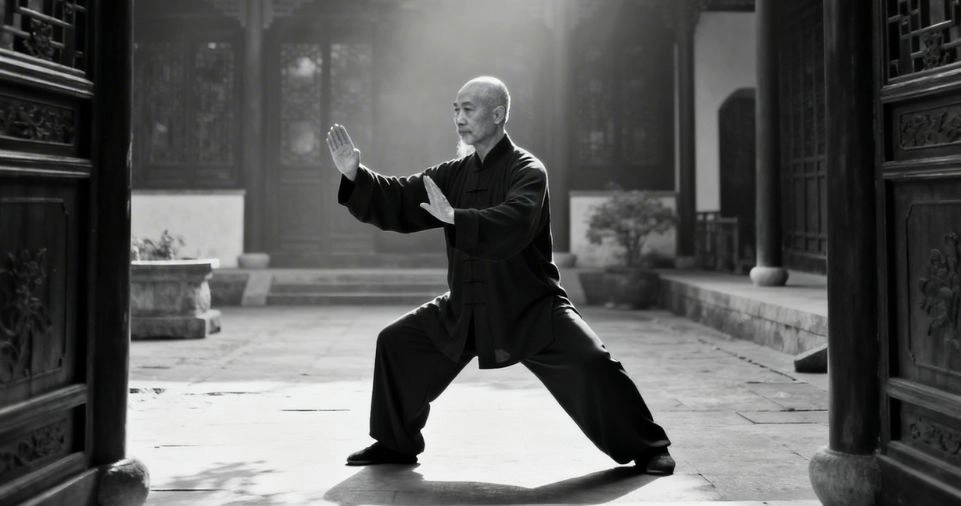
To understand tai chi walking, it is essential to first understand its parent practice: Tai Chi Chuan. Tai chi walking grew directly out of the traditional Chinese martial art of Tai Chi Chuan, which originated in China hundreds of years ago. The practice is most commonly linked to Chen Wangting, a 17th-century Chinese martial artist and military officer who is widely credited with developing Tai Chi Chuan as a formal system — blending martial techniques with Taoist philosophy, breath control, and the cultivation of qi (vital energy).
Chen Wangting (circa 1600–1680) created the original Chen-style Tai Chi Chuan forms based on his military experience and study of Chinese philosophy, particularly the Taoist concept of yielding and flowing energy. The Chen family style is considered the oldest and most foundational of the five major tai chi styles.
Evolution into a Walking Practice
Over generations, the Chen family’s techniques evolved into the Yang, Wu, Sun, and other major schools of tai chi. Within this tradition, walking drills were used systematically by classical teachers to build the core skills that all tai chi forms require: stability, rootedness, sensitivity to ground contact, controlled weight transfer, and efficient movement. According to modern tai chi expert Li, in classical training, walking drills were used to build stability, sensitivity, rootedness and efficient movement — as if you have another pair of eyes at the bottom of your feet.
Over time, these walking methods were recognized for their therapeutic and health-preserving benefits, and eventually became a central element of tai chi as a wellness practice rather than solely a martial one. Today, tai chi walking is practiced globally by millions of people who may never study the martial applications of tai chi but who benefit enormously from its health-promoting movement principles.
Yang Style and Modern Standardization
The Yang style, founded by Yang Luchan (1799–1872) after studying under the Chen family, became the most widely practiced tai chi style in the world. It forms the basis of many modern tai chi walking programs, including the standardized 32-form Yang-style Tai Chi Chuan used in clinical research studies. Dr. Paul Lam, an Australian physician and leading tai chi health researcher, developed a series of evidence-based Tai Chi for Health programs that brought tai chi walking into mainstream health and medical communities worldwide. His work, published in peer-reviewed journals including the Journal of Rheumatology, has been pivotal in establishing tai chi walking as a clinically validated health practice.
The Science Behind Tai Chi Walking: Key Research Studies
Tai chi walking is not simply a wellness trend — it is backed by decades of rigorous scientific research. Below are some of the most significant studies and findings:
Shanghai Men’s Health Study (2002–2009) — PMC / NIH
A large prospective cohort study published in the National Institutes of Health database examined 61,477 Chinese men over an average of 5.48 years. Researchers assessed the associations between tai chi, walking, jogging, and mortality. The study found that practicing tai chi was associated with a significantly reduced risk of death from any cause, cardiovascular disease, and cancer — results comparable to walking and jogging. The greatest mortality benefit was observed in men who performed approximately 5 to 6 hours of exercise per week.
Harvard Health Publishing Research Summary
Harvard Medical School has published extensive research reviews on tai chi, consistently finding benefits in muscle strength, flexibility, balance, fall prevention, cardiovascular health, and cognitive function. Harvard researchers note that when practiced regularly, tai chi can be comparable to resistance training and brisk walking in terms of its physical conditioning effects — a remarkable finding for such a gentle, low-impact exercise.
Hong Kong Cluster Randomized Controlled Trial
A landmark study published in the Archives of Physical Medicine and Rehabilitation (2017) examined 374 middle-aged Chinese adults who were randomly assigned to either a 12-week tai chi program, a 12-week brisk walking program, or a control group. Both the tai chi and walking groups practiced 45 minutes per day, five days per week. The results showed that tai chi had a higher effect than walking on improving resting oxygen consumption and kilocalorie expenditure, and tai chi had a significant effect on improving self-perceived mental health compared to controls. The study also found that both practices improved VO2max and body composition comparably.
JAMA Open Network Randomized Controlled Trial (2024)
A 2024 randomized controlled trial published in JAMA Open Network assigned 342 people with prehypertension to either four weekly sessions of tai chi or four weekly sessions of aerobic exercise. After one year, both groups showed lower blood pressure, but the tai chi group experienced a significantly larger drop — an average reduction of 7.01 mmHg systolic compared to 4.61 mmHg for the aerobic exercise group. This counterintuitive finding demonstrates that tai chi can outperform traditional aerobic exercise for blood pressure management.
JAMA Internal Medicine Fall Prevention Study (2018)
A 2018 study published in JAMA Internal Medicine assigned 670 older adults to either tai chi, stretching exercises, or a combination of aerobics, strength training, and flexibility exercises for six months. The tai chi group experienced 58 percent fewer falls compared to the stretching group and 31 percent fewer falls compared to the multimodal exercise group. This makes tai chi walking one of the most effective fall prevention interventions available, and particularly valuable for seniors.
BMJ Evidence-Based Medicine — Insomnia and Sleep
Research published in the journal BMJ Evidence-Based Medicine demonstrates that both walking and tai chi are individually effective treatments for insomnia. Tai chi researcher Dr. Elizabeth Eckstrom of Oregon Health and Science University has published research showing that participants fell asleep an average of 17 minutes sooner and slept 42 minutes longer per night after regular tai chi practice — a clinically meaningful improvement that rivals pharmaceutical sleep aids without side effects.
Medicine Journal — Knee Osteoarthritis (2021)
A 2021 scientific review published in the journal Medicine found that tai chi exercise significantly improved walking function and posture control in elderly patients with knee osteoarthritis. The review highlighted that tai chi was both effective and safe for this population, with a low risk of injury.
Tai Chi Walking vs. Normal Walking: Key Differences
Understanding how tai chi walking differs from regular walking helps clarify why it offers unique benefits that ordinary walking cannot replicate.
| Feature | Normal Walking | Tai Chi Walking |
| Pace | Moderate to brisk, goal-oriented | Deliberately slow, unhurried |
| Awareness | Largely automatic / subconscious | Fully mindful and intentional |
| Weight Transfer | Rapid, natural | Slow, controlled, one leg fully loaded before shifting |
| Foot Placement | Heel-to-toe, habitual | Conscious heel-first, ’empty step’ technique |
| Posture Focus | Incidental | Primary focus; spine upright, shoulders relaxed |
| Breathing | Uncoordinated with steps | Synchronized with each step and movement |
| Mental State | Often distracted | Meditative, present-moment awareness |
| Balance Training | Minimal | Intensive — single-leg loading builds stability |
| Joint Impact | Low-moderate | Very low — knees never extended beyond toes |
| Arm Movement | Natural swing | Flowing, coordinated with leg movements |
| Calorie Burn | Moderate to high | Low to moderate |
| Fall Prevention | Moderate benefit | High benefit — 58% fewer falls in clinical studies |
| Mental Health | Good | Excellent — significant reduction in anxiety, depression |
| Accessibility | Good — most fitness levels | Excellent — all ages, including post-surgery |
| Equipment Needed | Comfortable shoes | Comfortable shoes or bare feet |
| Best Setting | Outdoors / treadmill | Outdoors, indoors, park — any flat space |
How to Do Tai Chi Walking: Step-by-Step Guide for Beginners
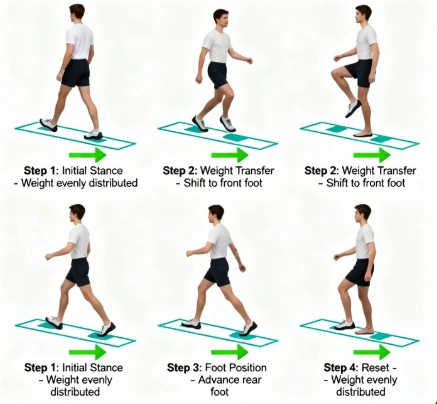
The core of tai chi walking is the Empty Step — placing your foot forward without shifting any weight until it is fully, safely planted. Think of a cat testing thin ice before stepping. This technique is the foundation of all tai chi movement.
Preparation
- Choose a quiet, open space with at least 6 feet of clear walking room — indoors or outdoors
- Wear flat, comfortable shoes or practice barefoot on a safe surface
- Wear loose, comfortable clothing that does not restrict movement
- Stand still for a moment, close your eyes, and take three slow, deep breaths to center yourself
Starting Position
- Stand with feet shoulder-width apart
- Bend your knees slightly — never lock them
- Keep your spine straight and your chin parallel to the ground
- Relax your shoulders completely — let them drop away from your ears
- Let your arms hang naturally at your sides or hold a gentle, rounded shape in front of the body
- Feel your feet fully connected to the ground — this is called ‘rooting’
The Walking Technique (Yang Style)
- Step 1 — Shift weight fully: Transfer 100% of your body weight onto your back (standing) leg. Keep a soft bend in both knees.
- Step 2 — Empty step forward: Reach forward with your front foot, placing it heel-first. Your toes point slightly outward at 45 degrees. Do NOT shift weight yet — the foot should feel weightless (empty).
- Step 3 — Secure the foot: Once your heel is placed, slowly lower your toes to the ground so the entire foot is flat.
- Step 4 — Shift weight forward: Only after the foot is fully planted, slowly transfer your weight forward onto the front leg. Your hips and waist should guide the movement.
- Step 5 — Coordinate your breath: Inhale as you step forward, exhale as you shift your weight. Keep breathing slow and even.
- Step 6 — Follow with the back foot: Bring your back foot forward, repeating the empty step process on the other side.
- Step 7 — Keep moving fluidly: Continue stepping forward with smooth, unbroken movement. When you reach the end of your space, pivot slowly and walk back.
Common Mistakes to Avoid
- Taking steps that are too large — keep strides short and controlled
- Locking the knees — always maintain a soft bend
- Looking down at your feet — keep your gaze softly forward
- Rushing — if you feel hurried, you are going too fast
- Holding your breath — breathing must remain continuous and natural
- Tensing the shoulders — check regularly and consciously release
When Should You Practice Tai Chi Walking?
One of the greatest advantages of tai chi walking is its flexibility. There is no single correct time to practice — the best time is the time you will consistently maintain. However, experts and practitioners offer the following guidance:
Morning Practice (Recommended by Many Experts)
- Practicing tai chi walking in the morning — ideally outdoors — helps establish mental clarity and physical awareness for the day ahead
- Morning practice has been shown to reduce cortisol levels and set a calm, focused tone for daily activities
- Even 10 to 15 minutes before breakfast is sufficient to experience benefits
Evening Practice
- Evening tai chi walking, practiced 1 to 2 hours before bedtime, can significantly improve sleep quality
- Research published in BMJ Evidence-Based Medicine confirms tai chi can help treat insomnia — making evening sessions particularly valuable for poor sleepers
Throughout the Day
- Short sessions of 5 to 10 minutes can be incorporated during lunch breaks or between periods of sitting
- This is especially valuable for those with desk jobs or sedentary lifestyles
Recommended Frequency and Duration
| Experience Level | Session Length | Frequency | Weekly Total |
| Complete Beginner | 10–15 minutes | 3 times per week | 30–45 minutes |
| Intermediate | 20–30 minutes | 4–5 times per week | 80–150 minutes |
| Advanced / Regular Practitioner | 30–45 minutes | Daily (5–7 days) | 150–315 minutes |
| Therapeutic / Clinical Goal | 45 minutes | 5 days per week | 225 minutes (per research) |
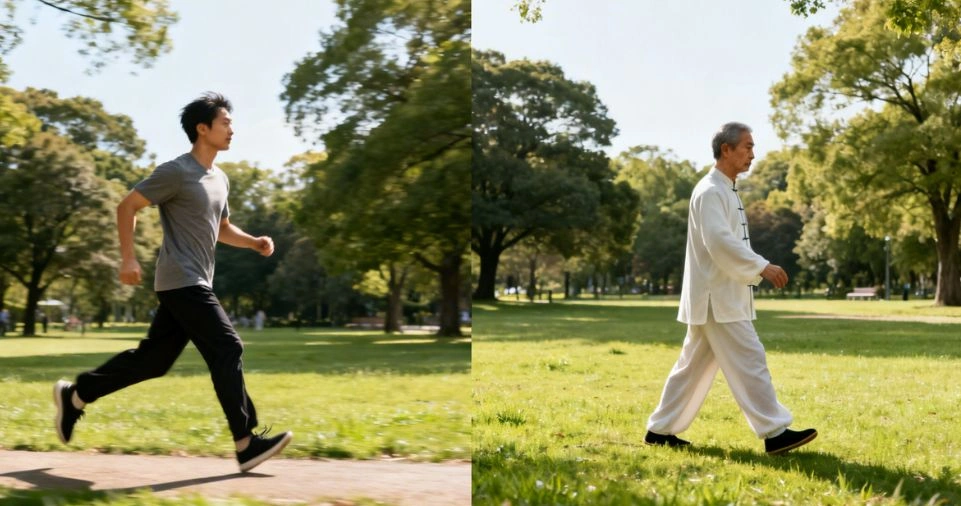
Where Should You Practice Tai Chi Walking?
Tai chi walking is one of the most location-flexible exercises in existence. It can be practiced virtually anywhere a person can walk safely and with some degree of calm.
Best Outdoor Locations
- Parks and gardens: The traditional setting for tai chi practice in China. Natural surroundings, fresh air, and open space enhance the meditative dimension of the practice.
- Beaches and shorelines: Walking on soft sand can further engage stabilizing muscles, though firm, flat sand is recommended for beginners.
- Quiet streets or footpaths: A calm neighborhood walk transformed through tai chi principles is perfectly valid.
- Gardens and courtyards: Any private or semi-private outdoor space works well.
Indoor Practice Options
- Living room or hallway: A minimum of 6 feet of clear floor space is sufficient for tai chi walking practice.
- Community halls and gyms: Many tai chi classes use standard indoor settings effectively.
- Hospital rehabilitation units: Tai chi walking is used in clinical settings for fall prevention and post-surgical recovery.
- Office spaces: A quiet corner or corridor during breaks allows for short micro-sessions.
Why Practice Tai Chi Walking? Complete Health Benefits
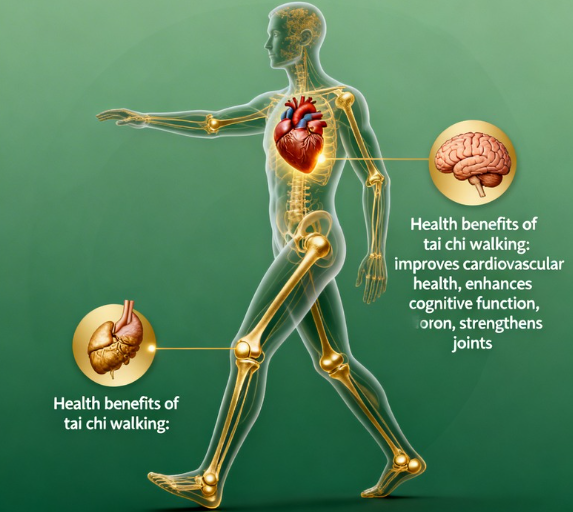
Physical Health Benefits
- Fall prevention: Clinical trials show up to 58% fewer falls in older adults practicing tai chi, making it the most cost-effective fall prevention intervention identified in research.
- Balance and coordination: The Empty Step technique demands continuous, active balance training, strengthening the proprioceptive system — your body’s internal sense of position and stability.
- Leg strength: Holding all body weight on a single leg during each step builds functional lower-body strength comparable to resistance training.
- Joint health: The low-impact, non-forced movements protect and lubricate joints. Research confirms reduced pain and improved function in knee osteoarthritis patients.
- Cardiovascular health: A 2024 JAMA study showed tai chi reduced blood pressure more effectively than aerobic exercise in people with prehypertension.
- Improved posture: Systematic focus on spinal alignment and weight distribution corrects habitual postural imbalances.
- Aerobic fitness: Both VO2max and cardiovascular endurance improve with regular practice, as confirmed by the Hong Kong cluster RCT.
- Chronic pain management: Research published in Aging Clinical and Experimental Research found tai chi significantly reduced pain in older adults with multisite chronic pain.
- Bone density: Studies show tai chi can help maintain bone mineral density, particularly important for postmenopausal women.
Mental and Cognitive Health Benefits
- Stress and anxiety reduction: Tai chi walking activates the parasympathetic nervous system, reducing cortisol and promoting the relaxation response.
- Depression improvement: Eight separate systematic reviews on tai chi and depression all showed consistently positive outcomes.
- Cognitive function: Five systematic reviews confirmed that tai chi improved cognitive performance, attention, and mental processing speed — benefits that exceed those of aerobic walking alone.
- Sleep quality: Participants in tai chi programs fell asleep 17 minutes sooner and slept 42 minutes longer per night (Dr. Elizabeth Eckstrom’s research).
- Mindfulness and self-awareness: The meditative quality of tai chi walking builds present-moment awareness that carries into all daily activities.
Social and Accessibility Benefits
- Completely free: No equipment, gym membership, or special facilities required.
- All ages and fitness levels: Tai chi walking has been successfully practiced by children, middle-aged adults, and people in their 90s.
- Safe for rehabilitation: Appropriate for those recovering from knee replacement, stroke, Parkinson’s disease, and cardiac events.
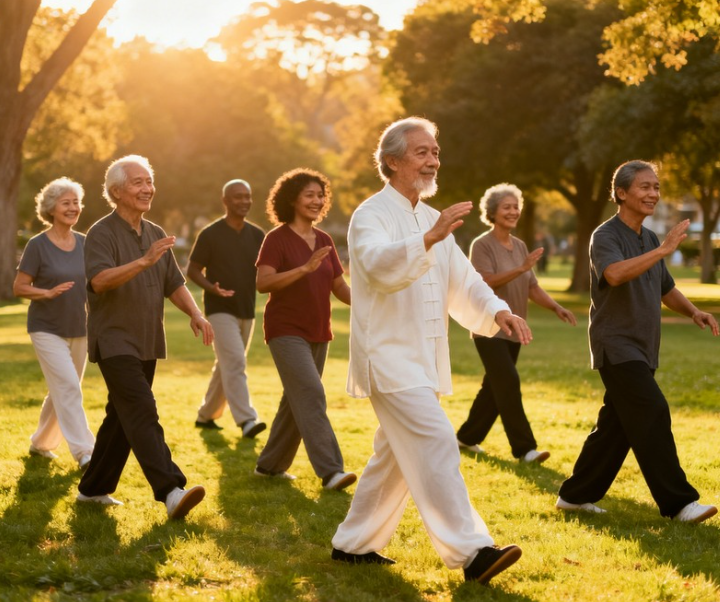
- Social engagement: Group practice in parks or community classes provides valuable social connection.
Who Can Benefit Most from Tai Chi Walking?
Tai chi walking is universally accessible, but research shows particularly strong benefits for specific populations:
- Older adults over 60 seeking to prevent falls and maintain independence
- People with osteoarthritis or joint pain who need low-impact exercise
- Individuals with high blood pressure or cardiovascular risk
- Those experiencing chronic stress, anxiety, or mild depression
- People with insomnia or poor sleep quality
- Individuals recovering from surgery, stroke, or other medical events
- People with Parkinson’s disease — tai chi is now recommended by many neurologists for balance management
- Desk workers and sedentary individuals seeking a mindful break
- Anyone interested in deepening a meditation or mindfulness practice through movement
- Beginners to exercise who find high-intensity workouts intimidating or unsafe
Practical Tips for Getting the Most Out of Tai Chi Walking
- Start with a qualified instructor: While tai chi walking can be learned from videos and guides, beginning with an in-person class helps ensure correct technique and prevents bad habits.
- Prioritize quality over distance: Tai chi walking is not about how far you go — it is about how well you walk each step. Even 15 minutes of excellent technique is more beneficial than an hour of distracted practice.
- Practice barefoot when safe: Bare feet on a grassy or clean indoor surface enhances ground sensitivity and proprioception training.
- Use a wall or chair when needed: Beginners or those with balance challenges should practice near a stable support object.
- Coordinate with breath consistently: The breath-movement coordination is one of the key mechanisms behind tai chi’s mental health benefits — do not neglect it.
- Be patient with slow progress: Tai chi walking is physically demanding in subtle ways. You likely won’t be able to maintain perfect technique for hundreds of steps immediately. Start with 10 to 20 steps and build gradually.
- Practice daily for best results: Research consistently shows the greatest benefits at approximately 5 sessions per week.
Frequently Asked Questions About Tai Chi Walking
Q1: Is tai chi walking suitable for complete beginners with no exercise experience?
Yes, absolutely. Tai chi walking is one of the most beginner-friendly exercises available. It requires no prior fitness, no equipment, and can be adapted to any physical limitation. Even people recovering from surgery or those who use mobility aids can often participate with appropriate modifications.
Q2: How is tai chi walking different from regular mindful walking or walking meditation?
While all three practices emphasize present-moment awareness, tai chi walking is uniquely structured around specific martial arts-derived movement principles: the Empty Step, controlled weight shifting, rooted posture, and coordinated arm movements. These structural elements provide physical conditioning benefits — particularly for balance, leg strength, and joint health — that ordinary mindful walking does not deliver as systematically
Q3: Can tai chi walking help with weight loss?
Tai chi walking is not a high-calorie-burning exercise, but it can support weight management as part of a holistic approach. The Hong Kong RCT (2017) found that tai chi significantly improved body composition over 12 weeks. Combined with healthy nutrition, regular tai chi walking supports gradual, sustainable weight reduction, improved muscle tone, and reduced waist circumference over time.
Q4: How soon will I notice results from tai chi walking?
Many practitioners report improved posture, better body awareness, and reduced stress within 2 to 3 weeks of regular practice. Measurable improvements in balance, blood pressure, and sleep quality typically appear within 8 to 12 weeks, consistent with the timelines of clinical research studies.
Q5: Is there any risk of injury with tai chi walking?
Tai chi walking carries an extremely low injury risk. Because movements are slow, controlled, non-impact, and never forced, the practice is safe for people with joint pain, cardiovascular conditions, and post-surgical recovery. Knee pain may occasionally occur if steps are too long or if the knee extends beyond the toes — both of which are corrected by proper technique instruction.
Q6: Can tai chi walking replace my regular workout?
For most healthy adults, tai chi walking is best used as a complement to other forms of exercise rather than a complete replacement. However, for older adults, those with limited mobility, or individuals managing chronic conditions, tai chi walking can serve as a primary exercise modality — and the research strongly supports its effectiveness in these populations.
Q7: What style of tai chi walking is best for health?
The Yang style is the most widely practiced and most extensively researched style for health purposes. The standardized 32-form Yang-style Tai Chi Chuan has been used in numerous clinical trials and is the foundation of most tai chi walking health programs. Beginners are generally recommended to start with Yang-style basic walking before exploring other styles.
Q8: Is tai chi walking effective for people with Parkinson’s disease?
Research and clinical experience strongly support tai chi walking for Parkinson’s disease management. Balance improvements, reduced freezing of gait, and enhanced confidence in movement have been documented. Cleveland Clinic’s Center for Geriatric Medicine lists tai chi as its number one exercise recommendation for older patients, with Dr. Ardeshir Hashmi citing compelling clinical evidence for its transformative effects on mobility.
Q9: How much space do I need to practice tai chi walking?
A minimum of 6 feet of clear, flat floor space is sufficient to begin practicing tai chi walking. Many practitioners walk back and forth across this space rather than requiring a long walking route. Parks, backyards, living rooms, and office corridors all provide adequate space.
Q10: Is tai chi walking the same as qi gong walking?
Tai chi walking and qigong walking share many similarities — both are slow, meditative, and breath-coordinated — but they come from distinct traditions. Tai chi walking is specifically rooted in Tai Chi Chuan martial practice and emphasizes structural movement patterns like the Empty Step and weight shifting. Qigong walking is a broader category that encompasses various Chinese mind-body movement traditions focused on cultivating and circulating qi. The two practices are highly complementary.
Conclusion: Why Tai Chi Walking Belongs in Your Daily Routine
Tai chi walking is far more than a fitness trend. It is a 17th-century martial and healing tradition, validated by modern science, accessible to virtually everyone, and free to practice anywhere. From its roots in Chen Wangting’s Tai Chi Chuan to the cutting-edge trials published in JAMA, Harvard Health, and the BMJ, the evidence is clear: tai chi walking delivers meaningful improvements in balance, cardiovascular health, mental wellbeing, joint health, sleep quality, and longevity.
What makes tai chi walking truly extraordinary is not just what it does for the body — it is what it does for the mind. In a world of distracted, rushed, and automated movement, tai chi walking invites us to return to the profound act of walking itself — slowly, fully, and with complete presence.
Start with ten minutes. Find a quiet space. Plant your feet, soften your knees, breathe slowly, and take one deliberate, conscious step at a time. That is where the transformation begins.