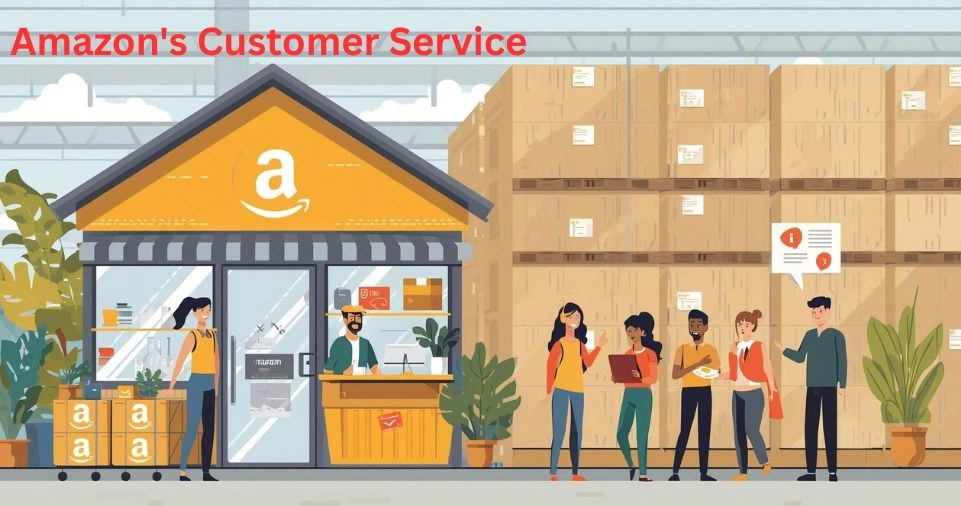
How Small Retail Stores Can Compete with Amazon’s Customer Service
Let’s be honest: competing with Amazon feels impossible. They have:
- Two-hour Prime delivery
- Millions of products
- One-click ordering
- Endless capital for technology
Meanwhile, you’re a small retail store owner juggling inventory, managing a handful of employees, and wondering how to survive.
Here’s the surprising truth: Amazon is vulnerable—and you have advantages they’ll never possess.
Think about it: Amazon knows what customers buy, but you know who your customers are. Amazon offers convenience, but you offer connection. Amazon ships products, but you create experiences.
According to a recent survey by the National Retail Federation, 73% of consumers say they’re willing to pay more for better customer service, and 68% would rather shop at a small business if the experience is personalized.
The battle isn’t about matching Amazon’s resources—it’s about leveraging your unique strengths to deliver something Amazon fundamentally cannot: genuine human connection combined with smart, modern convenience.
Understanding Where Amazon Falls Short
Before we explore how to compete, let’s identify Amazon’s weaknesses:
The Impersonal Experience
Amazon’s algorithm knows your purchase history but doesn’t know your daughter just started college, your kitchen is being renovated, or you’re training for your first marathon.
Their limitation: Scale requires standardization. Personalization beyond purchase patterns is impossible.
Your opportunity: Real relationships based on genuine knowledge of customers’ lives.
No Local Presence
Need something today? Amazon can’t help unless you live in select cities with same-day delivery.
Their limitation: Physical locations require massive infrastructure investments.
Your opportunity: Immediate gratification and in-person experiences.
Generic Customer Service
Try getting specific advice from Amazon about which running shoe suits your gait or which paint color matches your furniture.
Their limitation: Trained representatives handle millions of products superficially.
Your opportunity: Deep product expertise and contextualized recommendations.
Zero Community Connection
Amazon doesn’t sponsor your kid’s little league team, donate to local charities, or employ your neighbor.
Their limitation: Corporate structure disconnected from local communities.
Your opportunity: Authentic local identity and community investment.
Strategy 1: Hyper-Personalization Through Relationship Building
The most powerful weapon in your arsenal is something Amazon will never achieve: knowing your customers as people, not data points.
Implement Customer Recognition Systems
Low-tech approach:
- Train staff to remember names and preferences
- Keep simple customer preference notes
- Celebrate customer milestones (birthdays, anniversaries)
Technology-enhanced approach:
- Use affordable CRM systems like Shopify POS, Square, or Lightspeed with customer profiles
- Track purchase history and preferences
- Set reminders for follow-ups
Real example: Miller’s Hardware in Portland keeps detailed customer project notes. When John comes in, staff remember he’s renovating his 1920s bungalow and automatically suggest period-appropriate fixtures. Amazon would just show “Customers who bought this also bought…”
Create Personalized Communication
Email strategies that work:
- Send “thinking of you” product suggestions based on previous conversations
- Share relevant how-to content for recent purchases
- Provide early access to new arrivals matching their style
SMS approach: “Hi Sarah! Those boots you loved just came back in stock in your size 8. Want me to hold them for you? -Marcus at Trendsetter Boutique”
This beats Amazon’s generic “Item back in stock” notification every time.
Strategy 2: Leverage Your Local Advantage
Your physical presence isn’t a disadvantage—it’s a superpower when used correctly.
Same-Day Service That Actually Matters
Buy online, pick up in store (BOPIS):
- Allow customers to order online and pick up within 2 hours
- Offer curbside pickup for ultimate convenience
- Enable “reserve online, try in store” for hesitant buyers
Local delivery:
- Partner with services like DoorDash or Postmates for same-day delivery
- Offer free delivery within 5-mile radius for orders over $30
- Personal delivery by owner/manager for VIP customers
In-Store Experiences Amazon Can’t Replicate
Host community events:
- Product demonstrations and workshops
- Expert speaker series
- Customer appreciation nights
- Kids’ activities (craft days, story time)
Example: The Bookworm in Grand Rapids hosts 4 events monthly—author readings, book clubs, writing workshops. Revenue increased 28% after implementing event strategy. Attendees buy an average of 2.3 books per visit vs. 1.1 for regular customers.
Strategy 3: Become the Expert Amazon Isn’t
Amazon provides product descriptions. You provide knowledge, guidance, and solutions.
Staff Training Investment
Product expertise development:
- Weekly product training sessions
- Manufacturer certification programs
- Industry newsletter subscriptions shared with team
- Encourage staff to use products personally
Consultative selling approach:
- Train staff to ask questions before recommending
- Teach problem-solving, not just product-pushing
- Role-play customer scenarios weekly
- Reward quality assistance, not just sales numbers
Content Marketing as Service
Create helpful content:
- Blog posts solving customer problems
- YouTube tutorials using your products
- Instagram tips and tricks
- Email newsletters with seasonal advice
Green Thumb Garden Center example: Their “Plant Parent Academy” YouTube series has 12,000 subscribers. Videos like “5 Signs Your Succulent is Dying” drive 40% of new customer traffic. Amazon can’t offer this kind of specialized, locally-relevant guidance.
Strategy 4: Technology That Levels the Playing Field
You don’t need Amazon’s budget to deliver modern convenience.
Affordable Technology Solutions
| Technology Need | Solution | Monthly Cost | Impact |
| Customer relationship management | Square Loyalty, Shopify | $25-80 | Tracks preferences, automates marketing |
| Inventory visibility | Lightspeed, Vend | $60-120 | Shows real-time stock across channels |
| Online store integration | Shopify, WooCommerce | $29-79 | Enables 24/7 ordering |
| Text messaging | SimpleTexting, Podium | $25-100 | Direct customer communication |
| Appointment scheduling | Calendly, Acuity | $0-50 | Books consultations automatically |
| Review management | Podium, Birdeye | $200-400 | Generates and responds to reviews |
Omnichannel Integration
Create seamless experiences across touchpoints:
Unified inventory: Customer can see online if store has their size/color before visiting
Flexible fulfillment: Buy online + return in store, reserve online + pick up today
Cross-channel promotions: In-store purchase triggers email with complementary product suggestions
Mobile optimization: 79% of smartphone users purchase via mobile—ensure your site works flawlessly on phones
Strategy 5: Build Loyalty That Amazon Can’t Buy
Amazon Prime is transactional loyalty. Build emotional loyalty instead.
Community-Centric Programs
Local loyalty program structure:
Points-based: Earn points on purchases, redeem for rewards
Experiential rewards: VIP shopping hours, exclusive event invitations, early sale access
Community connection: Portion of purchases donated to customer’s chosen local charity
Social recognition: Feature loyal customers in newsletters, spotlight their stories
Exceptional Service Recovery
How you handle problems matters more than never having problems.
Amazon’s approach: Automated refunds, standardized responses, no human connection
Your approach:
- Personal apology from owner/manager
- Above-and-beyond solutions
- Follow-up to ensure satisfaction
- Turn mistakes into relationship deepeners
Case study: Riverside Pet Supply accidentally sold spoiled dog treats. They:
- Called every purchaser personally to apologize
- Delivered replacement treats plus $50 store credit
- Offered free vet exam if any pet got sick
- Implemented new quality control checks
Result: 94% of affected customers increased their spending in following 6 months. Half wrote positive reviews specifically mentioning the recovery.
Competitive Advantage Comparison
| Factor | Amazon | Small Retail Store |
| Product Selection | Millions of items | Curated, specialized selection |
| Price | Often lowest (loss leaders) | Competitive with added value |
| Convenience | 1-2 day shipping (most areas) | Immediate (in-stock items) |
| Personalization | Algorithm-based recommendations | Human understanding of needs |
| Expertise | Generic product info | Deep specialist knowledge |
| Community Connection | None | Integral to local fabric |
| Return Experience | Ship back or drop-off | Face-to-face, flexible |
| Discovery Experience | Endless scrolling | Curated browsing, serendipity |
| Customer Service | Chatbots, call centers | Personal relationships |
| Trust Factor | Corporate brand | Personal reputation |
Strategy 6: Master the Art of Customer Service Excellence
Customer service isn’t a department—it’s your entire business strategy.
The Small Store Service Advantage
Speed of resolution:
- Amazon: Fill out form → wait for response → possible escalation
- You: Speak with decision-maker immediately, problem solved in minutes
Flexibility:
- Amazon: Rigid policies applied uniformly
- You: Case-by-case judgment calls based on customer value and circumstances
Relationship preservation:
- Amazon: Transactional problem-solution
- You: Opportunity to strengthen relationship
Service Standards That Beat Amazon
Implement these non-negotiables:
Greeting within 10 seconds: Acknowledge every customer immediately
Three-foot rule: Any staff within 3 feet of customer offers assistance
HEARD method for complaints:
- Hear them out completely
- Empathize genuinely
- Apologize sincerely
- Resolve quickly
- Diagnose root cause to prevent recurrence
Follow-up culture: Check back after purchase to ensure satisfaction
Empower staff: Let employees make decisions up to $X without manager approval
Real-World Success Stories
Case Study 1: Anthology Boutique (Women’s Clothing)

Challenge: Opening across from a mall with multiple national chains, Amazon eating away at independent retail.
Strategy implemented:
- Personal styling service (30-minute free consultations)
- Text-based VIP group with first access to arrivals
- Instagram stories showing real customers wearing pieces
- Quarterly “customer spotlight” events celebrating regulars
- Local designer partnerships with exclusive pieces
Results after 18 months:
- 67% repeat customer rate (industry average: 32%)
- Average transaction $156 vs. $87 at chain competitors
- 4.9-star Google rating (347 reviews)
- 40% of sales from referrals
- Revenue growth: 18% annually in declining retail environment
Secret sauce: “We don’t just sell clothes. We help women feel confident. Amazon can ship a dress. We create a wardrobe that makes Monday mornings less stressful.”
Case Study 2: Urban Bike Works (Bicycle Shop)
Challenge: Competing with online retailers selling bikes at cost, Amazon’s growing bike category.
Differentiation tactics:
- Free lifetime adjustments on bikes purchased in-store
- “Commuter Club” with route planning, group rides, maintenance workshops
- Bike fitting service using professional equipment
- Partnership with local coffee shops for “ride and refuel” events
- Trade-in program for upgrades
- Text alerts when bikes matching customer wishlist criteria arrive
Results:
- Average customer lifetime value: $2,400 (vs. $600 estimated for online buyers)
- 78% of customers return for accessories and service
- Net Promoter Score: 82 (world-class level)
- Successfully opened second location despite “retail apocalypse”
Owner’s philosophy: “Amazon sells bikes. We create cyclists. That’s a relationship they can’t commoditize.”
Small Store Service Metrics to Track
| Metric | Measurement Method | Target Benchmark |
| Customer retention rate | (Customers returning / Total customers) × 100 | 60-70% |
| Net Promoter Score | Survey: “Would you recommend us?” | 50+ |
| Average transaction value | Total sales / Number of transactions | 15-25% above market |
| Customer lifetime value | Average annual purchase × Average customer lifespan | 3-5× acquisition cost |
| Review rating average | Average of all online reviews | 4.5+ stars |
| Response time | Average time to respond to inquiries | Under 2 hours |
| Referral rate | New customers from referrals / Total new customers | 30-40% |
| Employee tenure | Average years staff remain | 3+ years |
Quick Wins: Improvements You Can Make This Week
Monday: Optimize Your Google Business Profile
- Add current hours, photos, accurate description
- Enable messaging for direct customer contact
- Respond to all reviews (positive and negative)
Tuesday: Implement Text Communication
- Add your business number to SMS platform
- Create templates for common inquiries
- Train staff on professional text etiquette
Wednesday: Start Customer Recognition
- Create simple spreadsheet or use free CRM
- Note three personal details about each regular customer
- Train staff to reference these naturally
Thursday: Enhance Your Return Policy
- Review Amazon’s return policy for your category
- Match or exceed their flexibility
- Prominently display your policy in-store and online
Friday: Launch Email Capture
- Create compelling incentive (10% off, exclusive content)
- Add signup at checkout and on website
- Send weekly valuable content, not just promotions
The Mindset Shift: From Competing to Differentiating
Stop trying to be Amazon. They’re already doing that better than you ever will.
Instead, ask:
- What can I offer that no algorithm can replicate?
- How can I become irreplaceable to my customers?
- What makes my business uniquely valuable to my community?
- How do I turn transactions into relationships?
Amazon sells products. You sell experiences, expertise, and belonging.
That’s not a disadvantage—it’s an entirely different (and more defensible) business model.
Technology vs. Touch: Finding the Balance
The goal isn’t to choose between technology and personal touch—it’s to use technology to enable better human interactions.
Use technology for:
- Efficiency (inventory management, automated reminders)
- Convenience (online ordering, appointment scheduling)
- Consistency (CRM tracking, standardized communications)
- Scale (reaching more customers with less manual work)
Preserve human touch for:
- Complex needs requiring expertise
- Emotional moments (complaints, celebrations)
- Relationship building and trust development
- Personalized recommendations and problem-solving
The Sweet Spot: Technology handles routine tasks so staff has time for meaningful customer interactions.
Common Mistakes to Avoid
Mistake 1: Competing on Price Alone
Problem: You’ll lose to Amazon’s economies of scale
Solution: Compete on value—expertise, convenience, experience, service
Mistake 2: Ignoring Online Presence
Problem: If customers can’t find you online, you don’t exist
Solution: Solid website, active social media, complete Google Business Profile
Mistake 3: Inconsistent Service
Problem: Great experience once, disappointing next time destroys trust
Solution: Document service standards, train thoroughly, measure consistently
Mistake 4: Neglecting Employee Experience
Problem: Unhappy staff create unhappy customers
Solution: Fair pay, development opportunities, empower decision-making
Mistake 5: Copying Amazon’s Playbook
Problem: Playing their game means competing where they’re strongest
Solution: Create your own playbook leveraging your unique strengths
Building Your Action Plan
30-Day Quick Start
Week 1: Foundation
- Audit current customer service strengths and weaknesses
- Survey 20 customers about what they value most
- Optimize Google Business Profile
- Implement basic CRM system
Week 2: Communication
- Set up business texting capability
- Create email capture system
- Respond to all online reviews (past 6 months)
- Train staff on personalized service standards
Week 3: Experience Enhancement
- Plan first community event or workshop
- Create loyalty program framework
- Enhance return policy if needed
- Develop staff product expertise training schedule
Week 4: Technology Integration
- Implement online ordering or appointment booking
- Set up automated review requests
- Create social media content calendar
- Establish service quality metrics
90-Day Transformation
Month 1: Foundation and quick wins
Month 2:
- Launch loyalty program
- Host first community event
- Implement omnichannel inventory visibility
- Establish referral incentive program
Month 3:
- Analyze data and refine approaches
- Expand successful initiatives
- Deepen staff training
- Create signature experiences unique to your store
Measuring Success: Beyond Sales Numbers
Customer service excellence shows up in multiple ways:
Quantitative indicators:
- Increasing average transaction value
- Growing repeat customer percentage
- Higher review ratings and volume
- Expanding email list and social following
- Improving employee retention
Qualitative indicators:
- Customers bringing friends
- Unsolicited positive feedback
- Community recognition and partnerships
- Staff enthusiasm and pride
- Customers choosing you despite higher prices
The ultimate metric: When customers say “I can get this cheaper online, but I’d rather support you”—you’ve won.
Conclusion: Your Competitive Advantage is Being Human
Amazon is a technology company that sells products. You’re a community member who solves problems and creates experiences.
That’s not a weakness—it’s an insurmountable competitive advantage when executed well.
The small retail stores thriving in the Amazon era aren’t the ones with the lowest prices or the biggest inventory. They’re the ones that make customers feel:
- Valued as individuals, not transactions
- Supported by experts who genuinely want to help
- Connected to something larger than commerce
- Delighted by experiences that surprise and exceed expectations
You don’t need Amazon’s budget to deliver superior customer service. You need genuine care for your customers, strategic use of affordable technology, and commitment to being excellent at the things Amazon will never master.
Your Next Steps
This week:
- Choose three strategies from this article to implement immediately
- Survey 10 customers about what they value most about your store
- Audit your customer service against Amazon in five key areas
- Set measurable goals for improvement over next 90 days
This month: Create your differentiation strategy focusing on your unique strengths rather than Amazon’s weaknesses.
This quarter: Transform your business from competing with Amazon to becoming irreplaceable to your customers.
Remember: Amazon became Amazon by being the best at what they do—efficiency, selection, and convenience. You’ll succeed by being the best at what you do—relationships, expertise, and community.
The customers who choose Amazon want widgets delivered. The customers who choose you want experiences, guidance, and connection.
Stop trying to beat Amazon at their game. Win by playing yours.
Additional Resources: