WHY USE AI SEARCH MONITORING TOOLS IN 2026
Introduction
Search visibility has entered a new era. Your audience is no longer just scrolling through traditional search results — they are asking AI systems for direct answers, product comparisons, and trusted recommendations. If your brand is not included in those AI-generated responses, you are losing visibility without even knowing it.
This guide is designed to solve three major challenges businesses face in 2026:
- Understanding why traditional SEO metrics are no longer enough in an AI-driven search environment.
- Identifying how AI search monitoring tools reveal hidden visibility gaps that impact revenue and brand authority.
- Helping you choose the right AI monitoring approach based on your business size, goals, and technical maturity.
By the end of this article, you will understand how AI visibility works, why it matters, and how to systematically protect and grow your brand presence inside generative search platforms.
A Complete Guide to AI Visibility, Brand Mentions & Generative Search Optimization

1. The Shift From Traditional SEO to AI-Driven Search Visibility
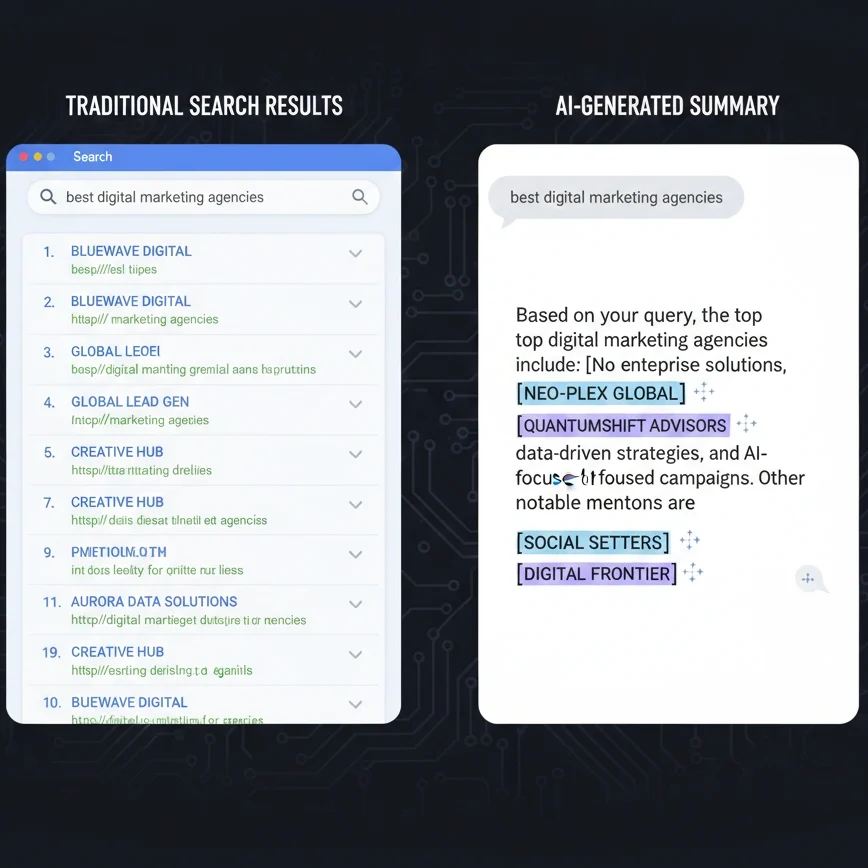
Recent research by UPCEA highlights the growing AI search gap in higher education, showing that a large portion of users now rely on AI-generated answers before visiting websites. This trend emphasizes the need for organizations to track AI visibility proactively. Without monitoring, brands risk being invisible in critical decision-making moments. AI search monitoring tools help bridge this gap by identifying where your content is cited—or missing—in AI-driven results.
Users are no longer just clicking blue links. They are:
- Asking ChatGPT for product recommendations
- Using Perplexity for research summaries
- Reading Google AI Overviews instead of scrolling
- Consulting Claude for software comparisons
- Interacting with conversational shopping assistants
Traditional SEO measures:
- Rankings
- Click-through rates
- Impressions
- Backlinks
But AI search introduces a new visibility layer:
- Brand mentions
- Citations in generated answers
- Inclusion in recommendation lists
- AI answer share-of-voice
You can rank #1 organically and still not be mentioned in AI-generated results.
That creates a visibility gap.
AI search monitoring tools exist to close that gap.
2. What Are AI Search Monitoring Tools?
AI search monitoring tools track how often and where your brand appears inside AI-generated answers across platforms such as:
- ChatGPT
- Google AI Overviews
- Perplexity
- Claude
- Gemini
- Bing Copilot
Instead of tracking keyword positions, these tools monitor:
- Prompt-level mentions
- Citation frequency
- Competitor inclusion rates
- AI response patterns
- Share-of-voice inside generated answers
They function as:
- AI visibility analytics platforms
- Generative engine optimization (GEO) tracking systems
- Answer engine optimization (AEO) intelligence tools
This is fundamentally different from rank tracking.
3. Why Traditional Rank Tracking Is No Longer Enough
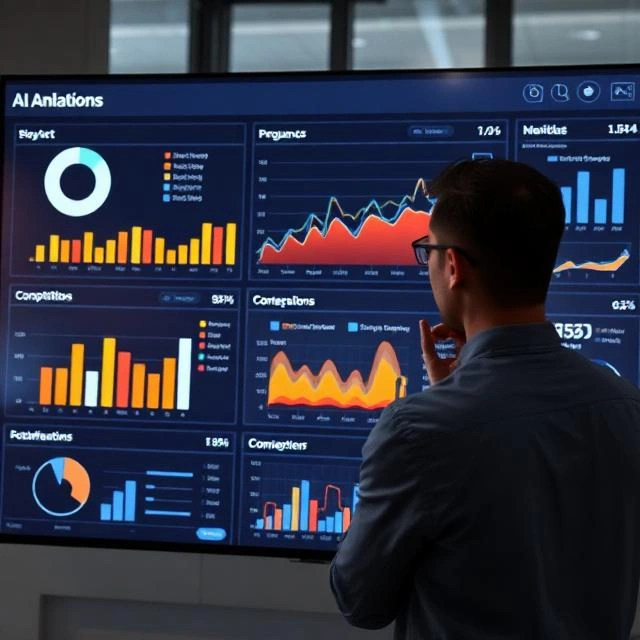
Rank tracking measures:
- Position in search engine results pages (SERPs)
But AI search often:
- Displays generated answers above organic listings
- Synthesizes multiple sources
- Reduces click-through behavior
- Removes the need to scroll
This creates three problems:
Problem 1: Invisible Brand Loss
Your competitor is recommended in AI responses, but you are not.
Problem 2: Undetected Consideration Shift
Customers form opinions from AI summaries before visiting any website.
Problem 3: Attribution Blind Spots
You may not know AI influenced the decision at all.
AI search monitoring tools reveal this hidden layer.
4. The 10 Core Reasons to Use AI Search Monitoring Tools
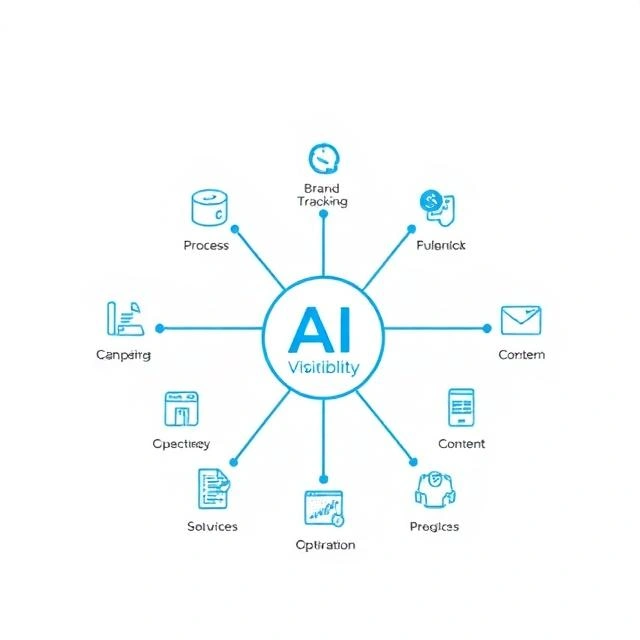
Below are the most keyword-optimized, high-impact reasons brands adopt AI monitoring platforms.
1️⃣ Track Brand Mentions in AI-Generated Answers
Without monitoring, you cannot see:
- Whether your brand appears in AI summaries
- How often competitors are recommended
- Which prompts trigger your inclusion
AI mention tracking provides measurable AI visibility metrics.
2️⃣ Identify Competitor AI Share-of-Voice
AI tools compare:
- Competitor mention frequency
- Citation dominance
- AI response patterns
This helps you detect:
- Competitive gaps
- Emerging rivals
- Shifts in AI recommendation behavior
3️⃣ Detect Content Gaps for AI Optimization
AI monitoring reveals:
- Prompts where competitors appear but you do not
- High-intent queries missing your content
- Topics AI systems frequently answer
This enables structured GEO content strategies.
4️⃣ Understand AI Citation Sources
Some platforms show:
- Which pages are cited
- Which domains AI systems reference
- Patterns in trusted content
This supports strategic authority building.
5️⃣ Improve Generative Engine Optimization (GEO)
GEO focuses on:
- Increasing retrievability
- Improving entity clarity
- Enhancing citation likelihood
AI monitoring shows whether optimization efforts work.
6️⃣ Protect Brand Reputation in AI Answers
AI-generated summaries can:
- Misrepresent brands
- Omit critical differentiators
- Emphasize competitor strengths
Monitoring provides early detection.
7️⃣ Measure AI Visibility Trends Over Time
AI search is evolving rapidly.
Monitoring tools track:
- Month-over-month mention changes
- Impact of content updates
- AI algorithm shifts
8️⃣ Align SEO and AI Strategy
AI visibility intersects with:
- Content depth
- Structured data
- Internal linking
- Authority signals
Monitoring bridges traditional SEO and AI optimization.
9️⃣ Support High-Consideration Purchase Funnels
Industries heavily impacted by AI recommendations:
- SaaS
- B2B software
- Finance
- Healthcare
- Ecommerce
AI monitoring reveals whether you are included in comparison prompts.
🔟 Prepare for the AI Agent Economy
Future commerce will involve:
- AI buying assistants
- Conversational product comparisons
- Automated research agents
Monitoring tools help you prepare for that shift.
Detailed Overview of Leading AI Search Monitoring Tools
1. Sight AI
Overview
Sight AI is built specifically for AI search visibility tracking. It monitors brand mentions across multiple AI platforms and connects insights directly to content opportunities.
Core Strength
Content gap identification tied to AI prompts.
Pros
- Multi-platform tracking
- Prompt-based visibility analysis
- Content opportunity prioritization
- Historical AI visibility tracking
- Team collaboration features
Cons
- Requires active content team to act on insights
- May be excessive for very small businesses
- Pricing transparency limited
2. BrightEdge
Overview
An enterprise SEO platform that integrates AI visibility into existing SEO infrastructure.
Core Strength
Unified SEO + AI analytics.
Pros
- Enterprise-grade reporting
- Cross-domain tracking
- AI + traditional SEO integration
- Strong data science modeling
Cons
- High enterprise pricing
- Complex onboarding
- Best suited for large organizations
3. Semrush
Overview
Well-known SEO suite now including AI Overview tracking within Google.
Core Strength
AI visibility integrated with keyword database.
Pros
- Familiar SEO interface
- Strong competitor comparison
- Large keyword database
- Mid-market friendly pricing
Cons
- Primarily focused on Google AI Overviews
- Less specialized in deep AI prompt simulation
4. Ahrefs
Overview
Data-focused SEO platform expanding into AI tracking.
Core Strength
Authority and backlink correlation with AI mentions.
Pros
- Strong backlink intelligence
- Keyword + AI integration
- Historical tracking
- Content explorer insights
Cons
- AI tracking still developing
- More SEO-centric than AI-specific
5. Authoritas
Overview
Enterprise AI visibility platform focusing on multi-country tracking.
Core Strength
International AI monitoring.
Pros
- Multi-language tracking
- Content attribute analysis
- API integrations
- Governance features
Cons
- Enterprise pricing
- Less accessible for SMBs
6. Conductor
Overview
Content-focused enterprise platform integrating AI visibility with content performance.
Core Strength
Content strategy alignment.
Pros
- Content workflow integration
- Real-time monitoring
- Performance forecasting
- AEO & GEO features
Cons
- Enterprise-oriented
- Requires structured content operations
7. seoClarity
Overview
Technical SEO-focused platform integrating AI monitoring.
Core Strength
Technical correlation with AI visibility.
Pros
- Structured data analysis
- Large keyword tracking
- Technical SEO integration
- API export
Cons
- Technical learning curve
- Enterprise cost
8. Alli AI
Overview
Automation platform for AI-focused SEO changes.
Core Strength
Bulk implementation automation.
Pros
- Automated optimization
- Multi-site management
- Schema generation
- A/B testing
Cons
- Automation requires oversight
- Best for agencies or large portfolios
9. Peec AI
Overview
Competitor AI monitoring tool.
Pros
- Competitor visibility insights
- Prompt tracking
- Market comparison
Cons
- Narrower feature scope
- Limited broader SEO integration
10. Profound
Overview
Enterprise AI visibility analytics with attribution alignment.
Pros
- Deep enterprise analytics
- Conversion alignment
- Executive reporting
Cons
- High enterprise pricing
- Complex setup
Pricing Comparison Table (Estimated Public Ranges)
| Tool | Entry Pricing | Enterprise Pricing | Best For |
|---|---|---|---|
| Sight AI | Custom | Custom | Content-focused teams |
| BrightEdge | Custom | High enterprise | Large enterprises |
| Semrush | $139.95/month | Custom | Mid-market |
| Ahrefs | $129/month | $14,990/year | SEO professionals |
| Authoritas | Custom | Enterprise | Global brands |
| Conductor | Custom | Enterprise | Content enterprises |
| seoClarity | Custom | Enterprise | Technical SEO teams |
| Alli AI | $249/month | Custom | Agencies |
| Peec AI | Varies | Custom | Competitor tracking |
| Profound | Custom | Enterprise | Large organizations |
Final Strategic Insight
AI search monitoring tools are not replacements for SEO.
They are extensions of search intelligence into the generative AI era.
They solve three primary business problems:
- Invisible AI brand loss
- Undetected competitive advantage shifts
- Lack of AI-driven attribution insight
Organizations that monitor AI visibility early gain:
- Strategic advantage
- Faster content adaptation
- Competitive AI share-of-voice growth
Frequently Asked Questions (FAQ)
1. What are AI search monitoring tools?
AI search monitoring tools are platforms that track how often and where a brand appears inside AI-generated answers across systems like ChatGPT, Google AI Overviews, Perplexity, Claude, and Gemini.
Unlike traditional SEO tools that measure keyword rankings, AI monitoring tools track:
- Brand mentions
- Citation frequency
- Share-of-voice in AI answers
- Competitor inclusion rates
- Prompt-level visibility
They help businesses understand how AI systems represent their brand during conversational search queries
2. Why are AI search monitoring tools important in 2026?
AI-generated answers increasingly appear before traditional search results. Many users rely on summarized AI responses instead of clicking multiple links.
Without AI monitoring, businesses cannot see:
- Whether they are included in AI recommendations
- Which competitors are being mentioned instead
- How AI visibility trends are changing over time
In 2026, AI monitoring is important because AI systems influence brand consideration before website visits occur.
3. How are AI search monitoring tools different from traditional SEO tools?
Traditional SEO tools focus on:
- Keyword rankings
- Organic traffic
- Backlinks
- SERP position
AI search monitoring tools focus on:
- Mentions inside AI-generated answers
- Prompt-based visibility
- Citation patterns
- AI share-of-voice
Rank #1 in Google does not guarantee inclusion in AI-generated summaries. AI monitoring addresses that gap.
4. What platforms do AI monitoring tools track?
Most advanced AI search monitoring tools track visibility across:
- ChatGPT
- Google AI Overviews
- Perplexity
- Claude
- Gemini
- Bing Copilot
Some enterprise tools also monitor international AI platforms and regional variations.
5. How do AI systems decide which brands to mention?
AI systems rely on multiple signals, including:
- Content authority
- Semantic relevance
- Structured data
- External citations
- Entity recognition
- Content depth and clarity
AI search monitoring tools help identify patterns that correlate with higher citation probability and brand inclusion.
6. Can small businesses benefit from AI search monitoring?
Yes. Small and mid-sized businesses benefit by:
- Identifying missed visibility opportunities
- Detecting competitor dominance early
- Improving content strategy based on AI query trends
Even basic prompt-level monitoring can reveal high-impact gaps in competitive industries.
7. Is AI search monitoring replacing SEO?
No. AI search monitoring does not replace SEO.
Instead, it complements traditional SEO by expanding visibility measurement beyond rankings and traffic.
SEO focuses on search engine placement.
AI monitoring focuses on AI answer inclusion.
Together, they provide a complete search visibility strategy.
8. What industries need AI search monitoring the most?
Industries that rely heavily on comparison queries and research-based buying decisions benefit the most, including:
- SaaS and B2B software
- Ecommerce
- Financial services
- Healthcare providers
- Digital agencies
- Technology platforms
If customers ask AI systems for “best tools,” “top providers,” or “recommended platforms,” monitoring is critical.
9. How often should AI visibility be monitored?
AI visibility should be monitored consistently because:
- AI systems update frequently
- Content citations shift
- Competitor strategies evolve
- Algorithm behaviors change
Monthly trend tracking is recommended for most organizations, while high-competition industries may require weekly monitoring.
10. What features should I look for in an AI search monitoring tool?
Key features to evaluate include:
- Multi-platform AI tracking
- Prompt-level monitoring
- Competitor comparison
- Share-of-voice analysis
- Historical visibility tracking
- Citation source identification
- Reporting and export capabilities
Enterprise teams may also require API access and international monitoring.